
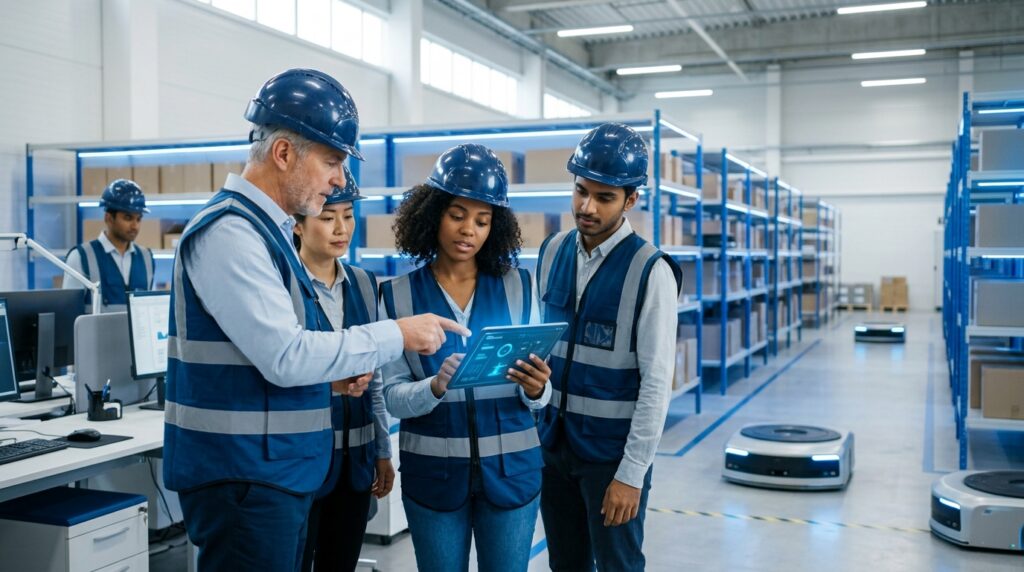
Digital transformation has accelerated rapidly in the Logistics and Transportation sector. Automation of Distribution Centers, collaborative robotics, AI-powered control towers, and predictive fleet systems have become priorities in the CAPEX budgets of large operators and shippers. However, a critical obstacle threatens the return on these investments: the skills gap at the operational level.
According to the Future of Jobs World Economic Forum's, approximately 44% of workers' skills will need to be updated in the next five years, with the acceleration of technology being the main driving force behind this transition. In the logistics sector, this impact is even more immediate. The introduction of a new WMS (Warehouse Management System) or autonomous readers fails not because of the technology itself, but because of the lack of structured Upskilling (improvement of current skills) and Reskilling (retraining for new roles) programs aimed at the operational team and first-line supervision.
As specialists in executive recruitment and selection, we observe that companies attempting to solve this bottleneck encounter an insurmountable barrier: professionals fully prepared for digital logistics operations have simply become scarce. The sustainable solution involves the internal transformation of talent.
1. The end of the purely manual profile and the rise of the data-driven operator.
The modern yard operator or checker no longer deals only with clipboards and physical movement. They need to interpret simple operational dashboards, interact with high-precision data collectors, and signal anomalies in storage algorithms. When leadership fails to digitally literate the base, the direct result is increased cycle time (lead time), picking erros and widespread frustration that inflates turnover within the first 90 days of hiring.
2. Operations Supervisors: The broken link in change management.
The biggest point of friction in reskilling is at the supervisory and coordination level. Many operations leaders were promoted for their history of excellence in analog processes or their ability to manage manual crises. Requiring that same leader to lead the digital transition without leadership training in change management and data literacy is a strategic liability. Tactical leadership needs to learn how to translate technological data into clear guidance for the shop floor team.
3. Retraining is the cheapest Employer Branding and Retention strategy.
In a market with high labor volatility and talent shortages, investing in "Corporate Logistics Academies" creates a giant intangible asset. A logistics operator or driver who sees a clear path to internal technological training becomes an ambassador for the employer brand. This reduces recurring recruitment operational costs, decreases the ramp-up time for new hires, and strengthens the retention of strategic talent within the company.
The digital maturity of a logistics operation is not measured by the sophistication of its systems, but by the ability of its team to extract real value from them.
How has your company balanced investment in new technologies with the retraining of operational and supervisory teams in logistics? Has the bottleneck been one of attraction or internal development? Let's discuss in the comments!